Technical Projects
Gather
React, FastAPI, Python, Google Places API, Claude AI, Nginx
2026
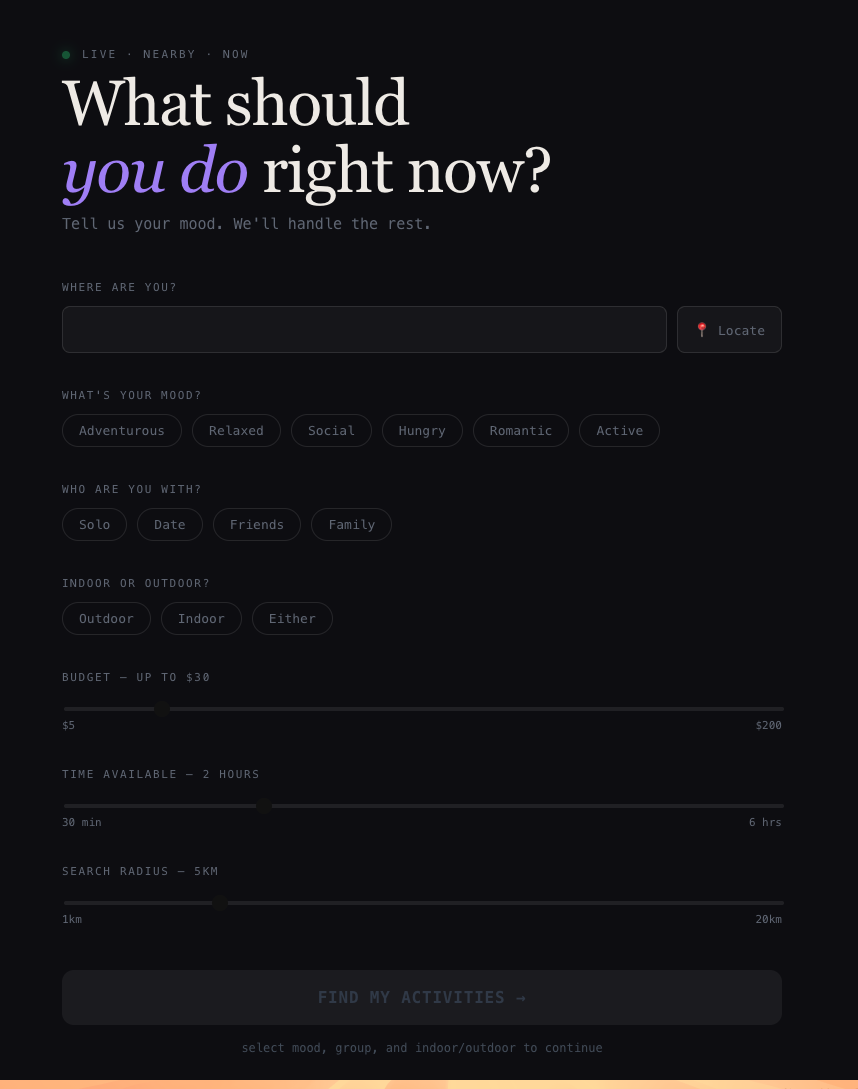
Tell Gather your mood, who you're with, how much time you have, and your budget. Gather searches real nearby places using Google Places and uses Claude AI to rank and explain the best options for you — right now.
Built with a React frontend deployed on Vercel and a FastAPI backend running on AWS EC2. The app uses a Retrieval-Augmented Generation (RAG) pipeline: Google Places API fetches real, current nearby places based on mood-specific mappings, live place data is injected into Claude prompts, and Claude ranks and explains recommendations grounded in actual place data.
Architecture: Vercel hosts the React frontend, AWS EC2 t3.micro runs the FastAPI backend with Nginx as a reverse proxy. Live at gatherapp.live.
Exoplanet Transit Classifier
PyTorch, Python, TensorFlow, scikit-learn
Feb 2026
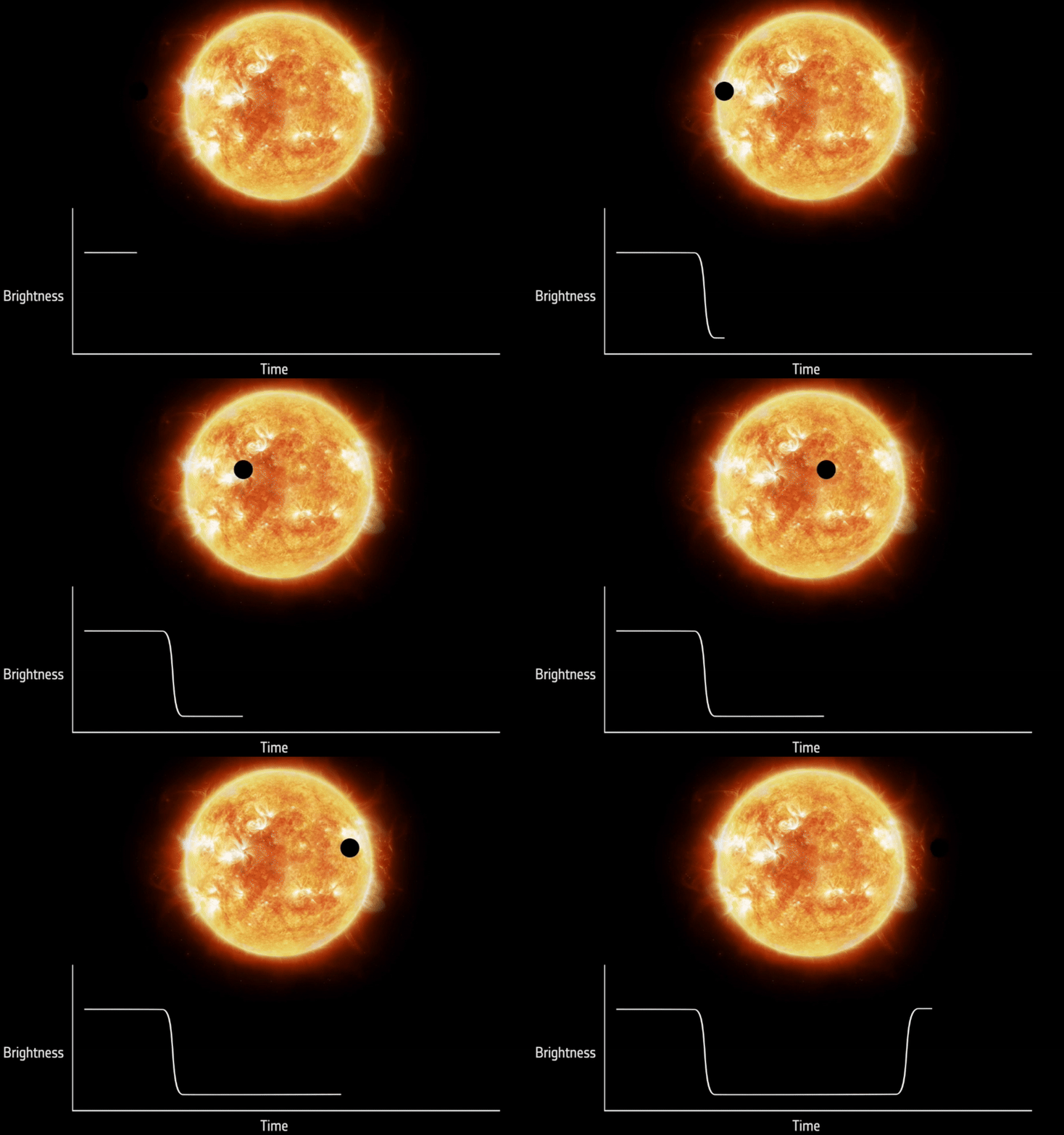
I've always been fascinated by the night sky, the idea that somewhere out there, thousands of other worlds are orbiting other suns. When I learned that NASA's Kepler telescope detected planets by watching stars flicker, I knew I had to try and build something that could do the same.
Each time a planet passes in front of its star, it dims the light ever so slightly, just a tiny blip in a sea of noise. I built a dual-branch 1D CNN in PyTorch that simultaneously studies the full orbital period and zooms in on the transit itself, fusing both perspectives to decide: real planet, or false alarm? The model catches 93.9% of all confirmed planet candidates, missing only 18 out of 360 in the test set.
Because missing a real planet matters far more than a false alarm, I applied cost-sensitive learning to the loss function, a decision that alone boosted recall by 12 percentage points. Final metrics: 97.7% AUROC, 93.9% recall on real NASA Kepler data.
Raspberry Pi Home Server
Linux, Docker, BASH
Nov 2025 – Present
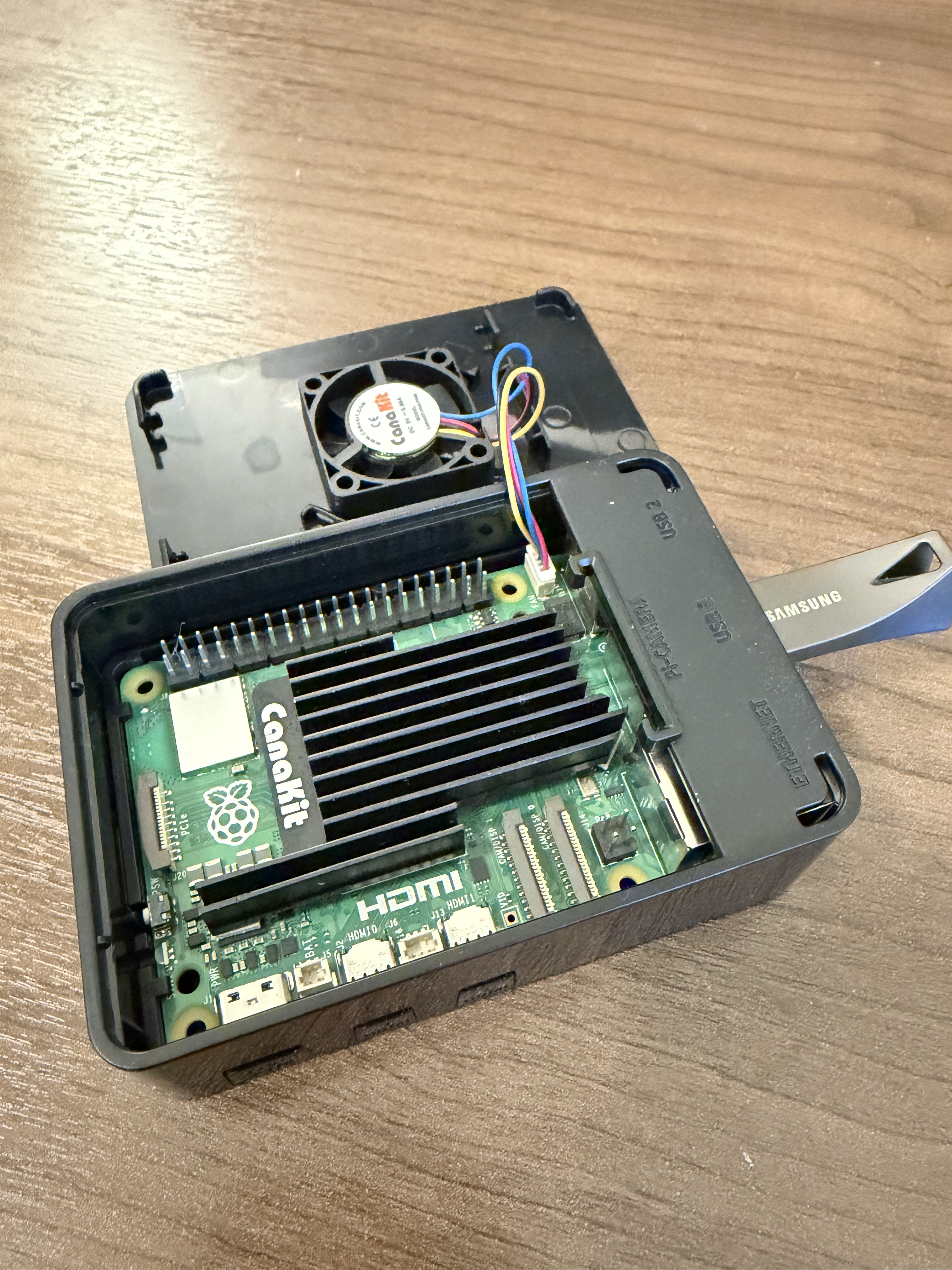
I got tired of ads on every device in my apartment and wanted full ownership of my data, so I decided to build my own infrastructure from a $50 Raspberry Pi.
I set up a Pi-hole that now blocks about 30% of all network traffic. Then I added a 2TB NAS for personal file storage, learning the ins and outs of disk partitioning, ext4 journaling, and fstab along the way. Everything runs in Docker containers so nothing can break anything else.
OS161 Kernel Development
C, OS161, GDB, Git
Sept 2025 – Dec 2025
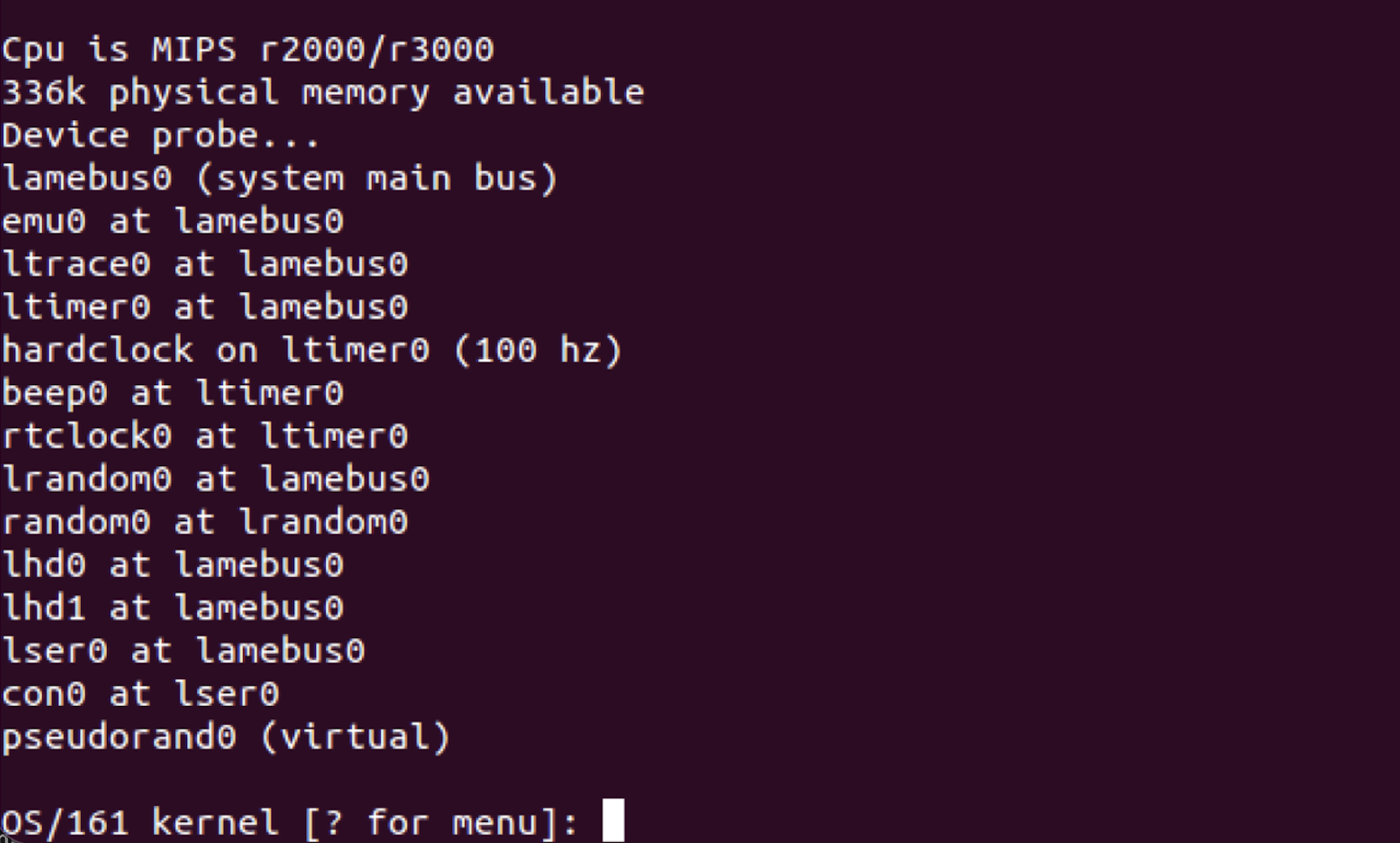
Ever wondered what actually happens when you call fork()? I got to find out by
building it from scratch. This was a project for my CPEN 331 Operating Systems class, where
we extended an instructional operating system with real Unix functionality.
I implemented everything from file operations (open, read, write, dup2) to process management (fork, execv, getpid) and thread synchronization using mutex locks and condition variables.
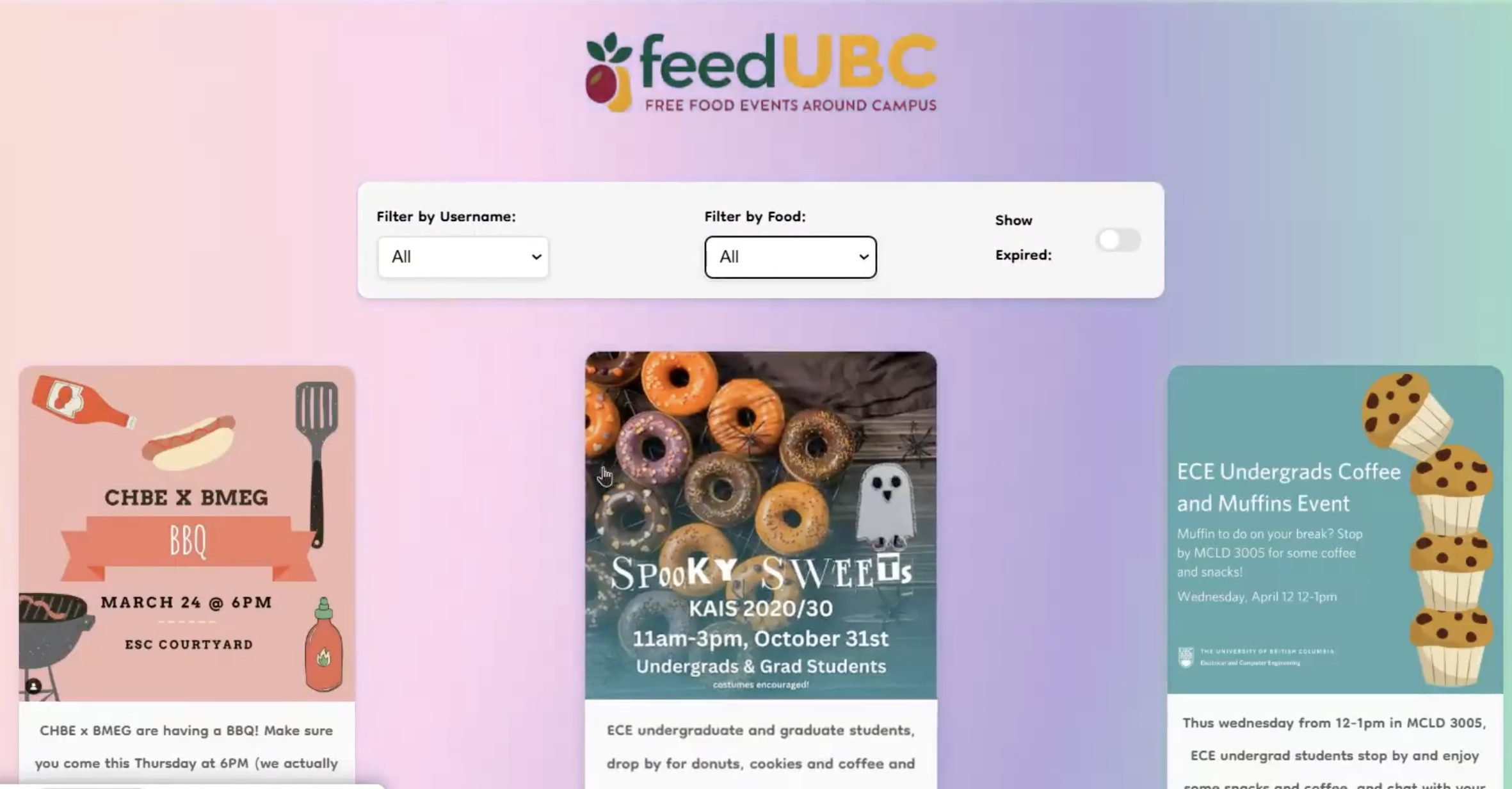
FeedUBC Web Application
TypeScript, Go, Node.js, HTML/CSS, Git
Sept 2024 – Dec 2024
University life can be expensive, so finding free food on campus is always a big help. Our team of 5 built a web app that scrapes Instagram posts from UBC clubs and event pages to find free food events in real-time.
We built the backend in Go and Node.js to handle the Instagram API integration, and wired up a TypeScript frontend with Google Calendar so you could add food events directly to your schedule.